Why Do Some Colorado Rivers Have Better Whitewater Than Others?
Colorado has no shortage of rivers. But if you’ve ever looked at a map and wondered why one river is known for big, continuous rapids while another is better for a relaxed float, the answer is more interesting than simply saying one has “more water.”
Great whitewater is a combination of geography, gradient, rocks, river channels, and flow. Add Colorado’s mountain snowpack to the equation, and the same river can feel completely different from one month to the next.
That’s why some Colorado whitewater rivers are famous for technical rapids, while others are better suited to beginners, scenic floats, or families. The river itself matters, but so does where you are on it, how much water is moving through it, and what the mountains did over the winter.
What Actually Creates Whitewater Rapids?
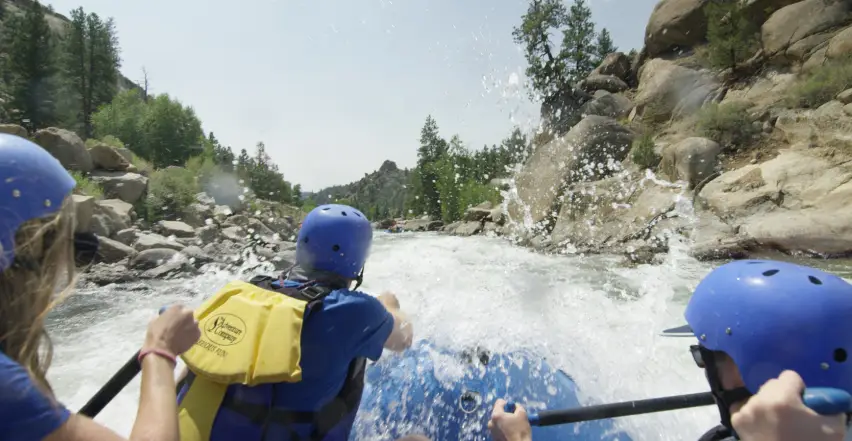
At its simplest, whitewater happens when fast-moving water is forced to move over, around, or through obstacles.
That might mean:
- Large boulders scattered across the riverbed
- A narrow channel that squeezes the water together
- A sudden drop in elevation
- Rock formations that push water into waves and holes
- A steep section of river where the current accelerates
A river with a gentle slope and a wide, open channel may carry a huge amount of water without producing much whitewater. On the other hand, a smaller river running downhill through a narrow, rocky canyon can create powerful rapids.
Gradient is a major part of the equation. Steeper sections of river generally give water more energy, while narrow or constricted channels can concentrate that energy and create standing waves and wave trains.
That is why the character of a river can change so dramatically within a relatively short distance.
The Arkansas River, for example, offers everything from moderate family-friendly sections to challenging Class IV and V whitewater. Colorado Parks and Wildlife notes that the river drops 4,650 feet over the 152-mile Arkansas Headwaters Recreation Area, with the riverbed and canyon geography helping create very different experiences along the way.
Why Does the Same River Change So Much?
This is where things get interesting.
A river is not one continuous type of whitewater.
Upstream, it might be narrow, steep, and filled with boulders. A few miles later, the valley can open up, the gradient can decrease, and the water can spread into a wider channel.
That means the same river can offer completely different rafting trips.
On the Arkansas River, sections near Buena Vista demonstrate this perfectly. The Numbers is known for more technical and demanding whitewater, while Browns Canyon offers a different balance of exciting rapids and stretches where you can actually look around and take in the scenery.
So when someone asks which river has the best rapids in Colorado, there isn’t really one simple answer.
Sometimes, the better question is:
What kind of whitewater are you looking for?
Snowpack: The Fuel Behind Colorado’s Rivers
Colorado’s rivers don’t begin when the snow starts melting in spring. In many ways, the rafting season starts during winter.
Snow accumulates in the mountains for months, storing water until temperatures rise. As spring and summer arrive, that snowpack melts and feeds streams and rivers across the state.
In the western United States, mountain snowpack acts like a natural water reservoir. Snowmelt plays a major role in streamflow, and USGS research notes that a large share of water in Colorado River Basin streams originates in the mountain snowpack of the Upper Colorado River Basin.
This is one of the biggest reasons river flow in Colorado changes throughout the year.
A heavy winter can mean stronger spring runoff. A lighter snowpack may produce lower flows. Temperature matters too. Warmer conditions can cause snow to melt earlier, shifting the timing of peak runoff and affecting how much water is available later in the season.
That doesn’t automatically mean higher water always equals better rafting.
More water can make some rapids bigger and faster, but it can also change the character of the river completely.
A boulder that creates a fun wave at one flow level might be almost submerged at another. A narrow channel may become more powerful. A rapid can change from technical and rocky to fast and wave-filled.
The river is the same. The experience isn’t.
Why River Flow Changes During the Season
If you’ve ever seen photos of the same Colorado river taken a few months apart, you may have wondered if they were even taken in the same place.
The main reason is flow.
During spring runoff, melting snow can dramatically increase the amount of water moving downstream. Later in the summer, flows may change as the snowpack is depleted, while groundwater and other sources continue helping sustain streams. USGS research also highlights the important role of baseflow, particularly outside the main snowmelt season.
Rain can affect river levels too, especially during storms, although Colorado’s major mountain river systems are heavily influenced by the amount and timing of snowmelt.
For rafters, that means a trip in June may feel very different from the same trip later in the summer.
More water can create bigger waves and faster currents. Lower water can expose more rocks and make certain sections more technical.
Neither is automatically better.
They are simply different versions of the same river.
What Makes the Arkansas River So Popular?
The Arkansas River stands out because it offers an unusual amount of variety.
Colorado Parks and Wildlife describes the Arkansas Headwaters Recreation Area as one of the nation’s premier whitewater destinations and says the Arkansas River is the most commercially rafted river in the United States. Along its course, rafters can find sections ranging from moderate Class II and III water to challenging Class IV and V rapids.
That variety is a big part of its appeal.
A family doesn’t need the same experience as a group of experienced rafters looking for continuous whitewater. On the Arkansas, different sections can offer very different levels of challenge.
A beginner might enjoy a calmer introduction to rafting.
An adventurous first-timer might find the balance they’re looking for in Browns Canyon rafting.
Meanwhile, experienced and eligible guests looking for a bigger challenge may be drawn toward The Numbers rafting.
The important thing is that the river gives people options.
That is often more valuable than simply having the biggest rapid.
Is the Colorado River Better for Scenic Rafting?
The Colorado River offers a different kind of experience depending on the section you explore.
Not every rafting trip needs to be built around nonstop rapids. A river can be memorable because of the canyon, the wildlife, the surrounding mountains, or simply the amount of time you have to take it all in.
That is why comparing the Arkansas River and the Colorado River as if one is universally better misses the point.
The Arkansas is particularly well known for variety and sections of active whitewater. The Colorado River can offer rafting experiences where scenery and the broader river journey play a larger role, depending on the stretch.
The “best” river depends on what you want from the day.
If you want:
- A wide range of rafting difficulty, the Arkansas offers plenty of options.
- Active whitewater and mountain scenery, different Arkansas River sections can provide both.
- A more relaxed river experience, another section or river may be a better fit.
- A trip where scenery matters as much as the rapids, the Colorado River may be worth considering.
There is no single river that wins every category.
And honestly, that’s part of what makes rafting in Colorado interesting.
So, Which Colorado River Has the Best Whitewater?
If “best” means the biggest rapids, your answer may be different from someone travelling with children.
If it means the most scenic canyon, you may choose differently again.
If it means the best first rafting experience, you probably don’t want to start with the same river section chosen by an experienced group chasing Class IV water.
For overall variety, though, the Arkansas River is difficult to ignore. Within the Arkansas Headwaters Recreation Area, the river changes from one section to another, offering a broad range of whitewater experiences shaped by elevation, gradient, channel features, and flow.
That variety is why choosing the right section can matter just as much as choosing the right river.
The River Is Only Half the Story
When you’re looking at best rivers for rafting in Colorado, it is tempting to search for one definitive answer.
The reality is more interesting.
A great whitewater river needs the right combination of slope, rocks, channel shape, and water. Colorado’s mountains add another variable through snowpack and seasonal runoff. Then the weather, the time of year, and the specific stretch of river can change the experience again.
That’s why one river can offer a gentle family trip in one section and serious whitewater just a few miles away.
And it’s why the best rafting experience isn’t necessarily on the river with the biggest rapids.
It’s on the river section that matches the adventure you actually want.
Before choosing a trip, explore the Arkansas River and Colorado River options and consider the time of year, current river conditions, your group’s experience level, and how much whitewater everyone is genuinely comfortable with.
Frequently Asked Questions
What creates whitewater rapids?
Whitewater rapids form when moving water flows over and around obstacles or through changes in the river channel. Rocks, boulders, steep gradients, narrow passages, and sudden drops can all create waves, holes, currents, and other whitewater features.
Why are some rivers better for rafting?
Rivers differ in gradient, channel shape, rock formations, water volume, and seasonal flow. A steep, rocky river can create more technical rapids, while a wider river with a gentler gradient may provide a calmer experience.
How does snowpack affect Colorado rivers?
Mountain snowpack stores water during winter. When temperatures rise, melting snow feeds streams and rivers, affecting both the amount and timing of seasonal river flow. Heavier snowpack and changing melt conditions can significantly affect the character of whitewater.
What river is best for beginner rafting in Colorado?
The best option depends on the specific river section and current conditions. The Arkansas River offers moderate sections suitable for beginners and families, while also providing more challenging water elsewhere on the same river.
Why does river flow change?
River flow changes because of snowmelt, rainfall, temperature, groundwater contributions, seasonal conditions, and water management. In Colorado’s mountain rivers, the amount and timing of snowmelt are especially important factors.